
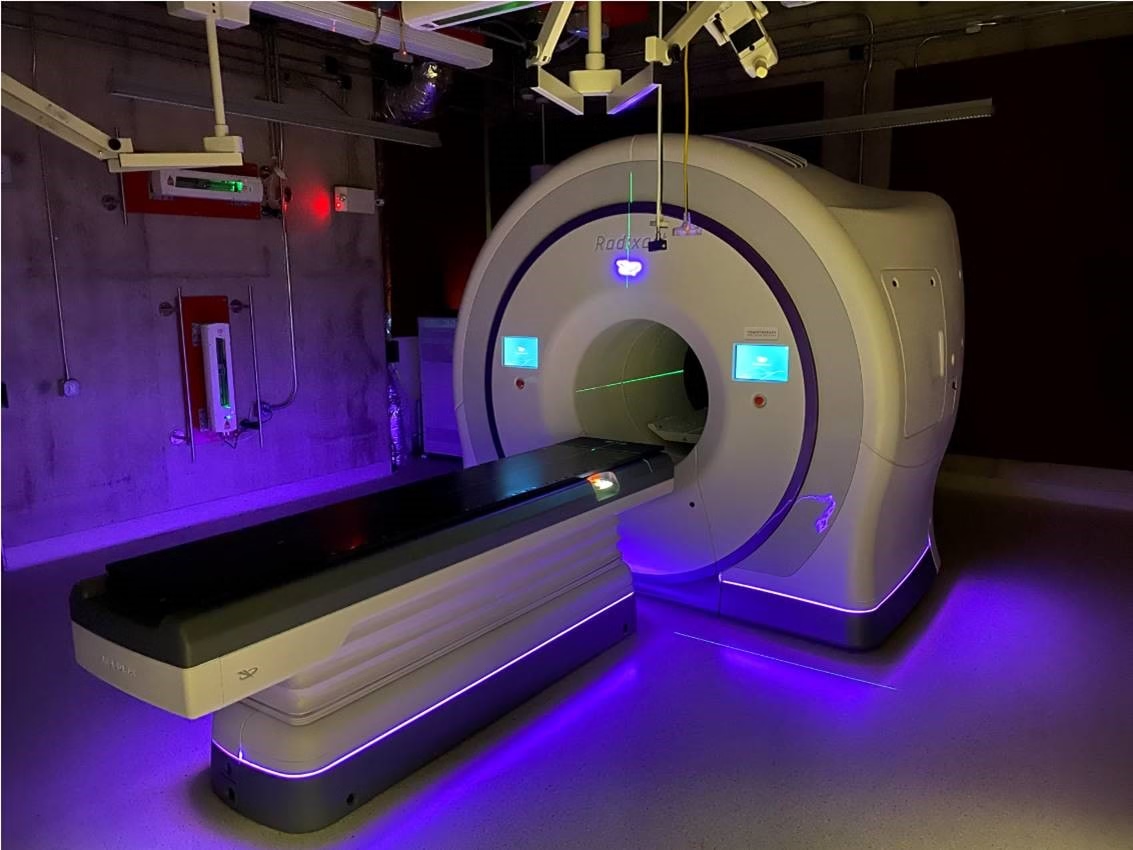
Harare, Zimbabwe — In a landmark development for the nation’s healthcare sector, ZiMetro News can reveal that Zimbabwe is set to receive its first consignment of state-of-the-art radiotherapy machines. The equipment, destined for the country’s largest referral centers—Parirenyatwa Group of Hospitals in Harare and Mpilo Central Hospital in Bulawayo—is currently in transit after successfully arriving at the Port of Durban in South Africa.
This move signals a decisive end to years of crisis in public cancer treatment, which has been plagued by obsolete machinery and agonizingly long waiting lists that left many vulnerable patients without hope.
A Multimillion-Dollar Investment in Health
According to the 2026 Zimbabwe Infrastructure Investment Programme, the Treasury has already disbursed US$5.3 million as a deposit to international suppliers. This payment has greenlit the manufacturing, delivery, and subsequent installation of the high-end medical units.
During an inspection of ongoing renovations at Parirenyatwa Hospital on Monday, Health and Child Care Minister Dr. Douglas Mombeshora confirmed that the government is moving with speed to ensure the facilities are ready for the new technology.
“Part of the first consignment is already in Durban on its way to Parirenyatwa, and the second tranche has also been completed,” Dr. Mombeshora stated. “We are now sending a technical team for pre-shipment inspection for the remaining units. Everything is in order.”
Sugar Tax: Funding the Fight Against Cancer
In a brilliant display of innovative financing, the procurement is being funded primarily through the Sugar Tax introduced in the 2024 National Budget. By targeting sweetened beverages, the government has created a sustainable revenue stream to combat non-communicable diseases (NCDs).
A total of US$30 million has been earmarked from this levy to revive radiotherapy services—the largest public-sector investment in cancer infrastructure since independence.
Decentralizing Specialized Care
The arrival of these machines is part of a broader strategy to decentralize oncology services. Dr. Mombeshora revealed that as the new equipment is installed in Harare and Bulawayo, the older (but functional) units are being decommissioned and redeployed.
-
Gweru Provincial Hospital: Set to become a new cancer treatment hub using equipment relocated from Mpilo.
-
Masvingo or Chinhoyi: These locations are being considered for the second redeployed unit to ensure patients in rural and peri-urban areas no longer have to travel hundreds of kilometers for care.
Modernizing the Medical Landscape
The investment goes beyond radiotherapy. The comprehensive equipment package includes:
-
Magnetic Resonance Imaging (MRI) machines
-
Chemistry and Blood Gas Analysers
-
Video Laryngoscopes and Vital Signs Monitors
-
Mass Spectrometers and Gas Chromatographs
These tools will modernize intensive care (ICU), emergency services, and surgical precision across the board.
NDS2: Prioritizing the People
Finance Permanent Secretary Mr. George Guvamatanga, who accompanied the Minister during the tour, emphasized that this modernization is a cornerstone of the National Development Strategy 2 (NDS2), running from 2026 to 2030.
“NDS1 was about prioritizing infrastructure to create a platform for growth. NDS2 is about social services—health, education, and ensuring we have world-class facilities,” Guvamatanga explained.
For the average Zimbabwean, this is a life-saving shift. With private radiotherapy costing between US$5,000 and US$10,000 per course, the revival of public services offers a lifeline to thousands who previously faced a choice between financial ruin and untreated illness.
