
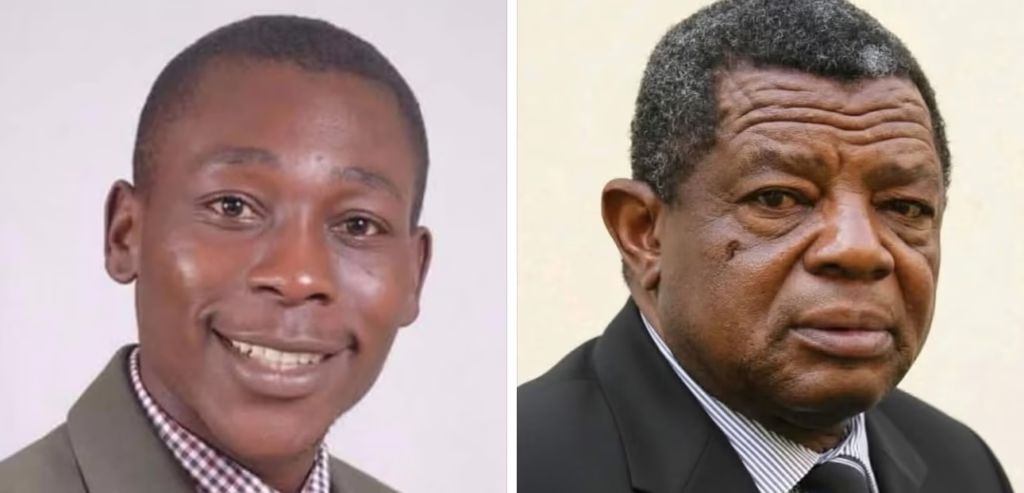
HARARE, Zimbabwe – A wave of shock and condemnation has swept across Zimbabwe following the reported assassination of Kudzai Weston Saruwaka, a young political activist associated with the anti-corruption GEZA Revolution movement.
His death, which allies and human rights organizations are calling a politically motivated killing, has intensified fears of escalating violence against dissenting voices in the nation.
The news broke late Thursday evening when Saruwaka’s older brother, former Member of Parliament Trevor JI Saruwaka, announced the death on social media. In a statement filled with anguish, he declared that his brother had been “assassinated by political thugs.” The timing of the death is particularly stark, coming just one day after the passing of the GEZA Revolution’s leader, Blessed “Bombshell” Geza, who died in South Africa after a battle with cancer
.
“You are a martyr who has paid the ultimate price for the freedom of Zimbabwe,” Trevor Saruwaka wrote in a tribute to his brother. “The cause is still there so the struggle shall continue.”
His announcement unleashed a torrent of grief and fury online. Citizens from all walks of life—friends, fellow activists, and ordinary Zimbabweans—voiced their disbelief and denounced what many perceive as a slide towards violent political suppression. The recurring sentiment was that such brutality is an unjustifiable and dangerous normalization of violence that threatens the very fabric of the nation.
In a forceful response, the civil society group All Hands on Justice (AHOJ) issued a statement condemning the killing in the “strongest possible terms.” AHOJ framed the event not merely as a murder but as a direct assault on democratic principles and fundamental human rights. The organization alleged that the assassination was perpetrated by members of the ruling party and demanded immediate and decisive action from the government.
“No political cause, affiliation, or moment can ever justify murder, intimidation, or the silencing of citizens through fear,” the AHOJ statement declared, warning that a failure to act would perpetuate a “cycle of impunity” where political violence is tacitly accepted or ignored.
The organization has called for the swift arrest and prosecution of all individuals involved in the crime, from the perpetrators to any who may have organized or concealed it.
As of this report, Zimbabwean authorities have remained silent on the matter, issuing no official statement to confirm the circumstances of Saruwaka’s death or to address the serious allegations being leveled. The lack of official information regarding the location and method of the killing has only fueled public anxiety and rampant speculation.
This incident occurs against a backdrop of heightened political tension in Zimbabwe. For many, the death of Kudzai Weston Saruwaka is more than a personal tragedy for his family; it is a chilling omen of the grave risks faced by those who dare to engage in political mobilization and challenge the status quo.
As calls for a transparent and independent investigation grow louder, observers warn that anything less could irrevocably damage public trust and push the nation deeper into a political crisis.