
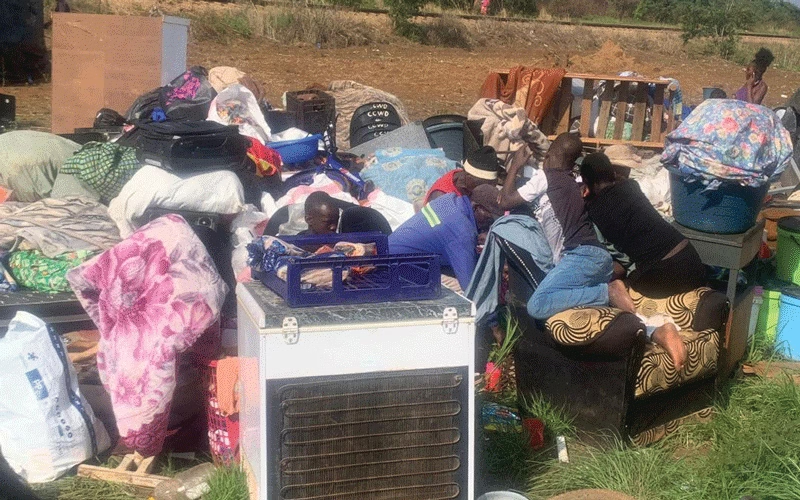
The humanitarian crisis at Willdale Farm has deepened, with thousands of evicted residents now camped along the Harare–Chinhoyi Highway. Among them are people living with HIV who lost their medication during last week’s High Court–sanctioned eviction and are now pleading with strangers, including journalists, for antiretroviral drugs.
When NewZimbabwe visited the roadside encampment on Monday, 40-year-old Danai Dube*, displaced and visibly exhausted, walked directly to a reporter with a question that captured the desperation gripping the community.
“Do you have any ARVs with you? Even two will help my child and me,” she asked.
It was her fifth day without treatment.
“I only managed to grab two blankets when we were evicted, which I’m sharing with my four children. Everything else was lost during the chaos,” she said. “I’m disclosing all this because my life is at stake, also that of my lastborn child, who is also on ART (antiretroviral therapy).”
Dube* said many others were facing the same peril.
“If well-wishers could consider a group of people like us, we would appreciate it because our lives are at stake.”
More than 7,000 residents were evicted from Old Willdale Compound after Willdale Bricks secured a court order to reclaim the land, valued at US$3 million and earmarked for housing and industrial development.
The company alleges the property had been overrun by “illegal brickmakers.”
Residents, however, described the eviction as sudden and devastating.
“We were surprised when the sheriff suddenly pounced on us in the company of truckloads of anti-riot police,” said Moffat Chizarira. “We were ordered out, our property was destroyed, and we lost identification documents, clothes, food, everything.”
Many of the families are descendants of Malawian and Mozambican labourers who worked at the farm decades ago. After the former white owner left during land reform, they were allowed to stay in lieu of unpaid wages. With no rural homes in Zimbabwe, they now say they are effectively stateless and stranded.
Today, they live in the open along a busy highway and railway line, exposed to rain, traffic hazards and the elements. There is no shelter, no ablution facilities, no clean water and no food unless donated.
“There is no privacy, no dignity, all that has been stripped off from us,” said Patricia Chiwanza. “We risk getting waterborne diseases. We don’t have diapers, we don’t have food, and we don’t even have space to bathe.”
She added that the disorder of the eviction left belongings scattered and unrecoverable.
“It will be a miracle if anyone recovers their property. We are over 3,000 families here.”
Local councillor Clive Phiri said the community has endured relentless downpours without any protection.
“Life has been so difficult… we are exposed to the rains every day. We need help,” he said.
Zvimba East Member of Parliament Kudakwashe Mananzva said government assistance has begun. “Help is on the way,” he said.
Nathan Nkomo, Director of the Department of Civil Protection, on Sunday confirmed the scale of the emergency, saying a temporary relocation site has been identified.
“A piece of land in Nyabira has been identified where we can relocate the people for now,” he said.
Esther Musvovi, whose late husband worked for Willdale, said she never received any benefits following his death.
“We were only told to use the houses as part of the retirement package,” she said.
As Dube* and others continue searching for life-sustaining medication, thousands of families face rising danger, from disease, hunger and unrelenting rains, as they wait for relocation and relief in an unfolding humanitarian disaster.
*name has been changed to protect identity