
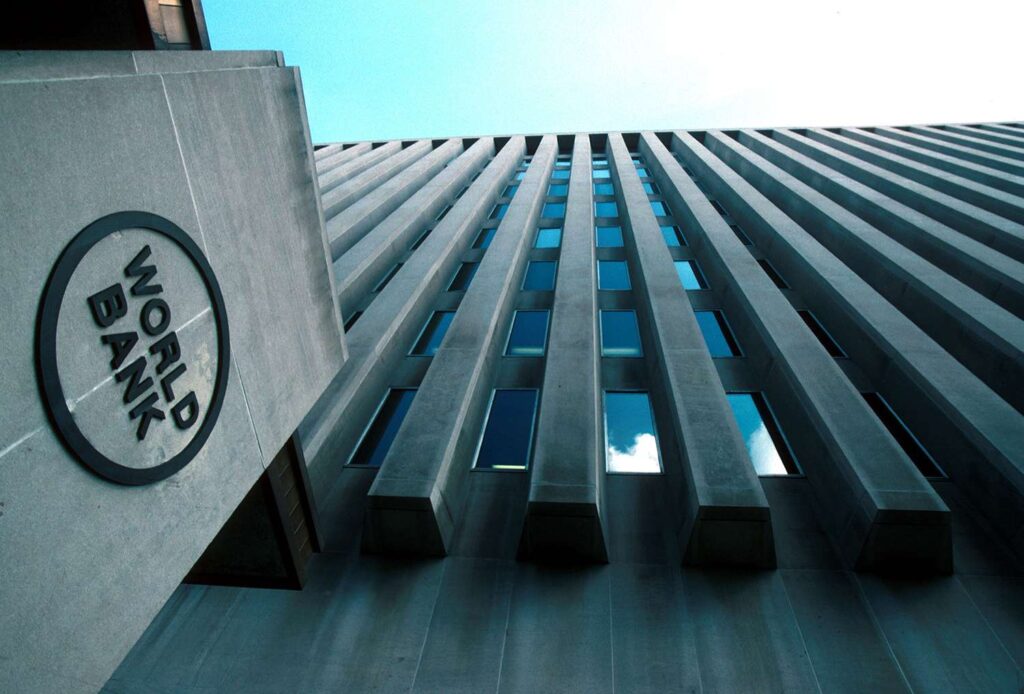
The World Bank’s latest Zimbabwe Economic Update has hailed the country’s economic recovery but cautioned that persistent regulatory inefficiencies and weak transparency could stall long-term development.
According to the report released Tuesday, Zimbabwe’s economy is projected to expand by 6.6% in 2025, boosted by strong agriculture output, a growing services sector, and increased investment in mining and steel. Growth is expected to remain firm at around 5% in 2026—outpacing several countries in Sub-Saharan Africa.
The Bank noted that tight monetary measures introduced in late 2024 have helped stabilise the Zimbabwe Gold (ZiG) currency and improve inflation trends. Inflation is forecast to drop into single digits by 2026 and move toward 5% in the medium term, offering some relief to households, though rural communities remain exposed to climate shocks, rising prices, and weak social protection systems.
World Bank Senior Country Economist Victor Steenbergen said the improving macroeconomic environment presents a chance for government to aggressively push reforms that enhance the ease of doing business and strengthen private-sector competitiveness.
While acknowledging progress made under the Presidential Ease of Doing Business Initiative, the report highlights ongoing regulatory hurdles. It reveals that sectors like agriculture, agro-processing and tourism face as many as 28 separate compliance requirements issued by various government departments.
The Bank flagged several recurring problems, including poor transparency, outdated paper-based processes, limited access to online information, and high compliance fees—some so steep that they surpass the annual earnings of small businesses.
It recommended stronger oversight of regulatory reforms, a clearer definition of institutional roles, rationalisation of fee structures, and a shift toward a more service-oriented approach. The issue of overlapping mandates was also raised, with different agencies issuing similar permits and conducting duplicate inspections, inflating costs for businesses without visible public benefit.
Although reforms have already streamlined regulations in sectors such as beef, dairy, stockfeed and tourism, the Bank urged authorities to speed up simplification efforts across 12 remaining priority sectors within the next year.
The update calls for a broader medium-term reform agenda built on three pillars—transparency, simplification and governance—to create a more predictable and business-friendly regulatory environment. Key proposals include establishing a central public registry for all licenses and fees, removing duplicated procedures, and adopting risk-based compliance systems.
However, the report has drawn mixed reactions. Critics argue that international financial institutions often rely on government-supplied data, which they say may not reflect actual conditions on the ground.
Journalist Hopewell Chin’ono warned that unreliable data distorts the country’s economic picture:
He argued that if surveys are conducted without verifying information directly from companies, the resulting figures become theoretical and detached from everyday realities. Chin’ono pointed to economist Steve Hanke’s market-based inflation models, which many Zimbabweans believe better reflect real-life economic pressures.
Chin’ono added that institutional dishonesty and manipulated data undermine effective policymaking, insisting that “when the inputs are false, the outputs will never guide the country out of crisis.”