
Harare — Zimbabwe’s youth are increasingly taking a leading role in shaping the country’s disaster risk management agenda, with government and development partners strengthening platforms that ensure young people contribute meaningfully to national resilience-building efforts.
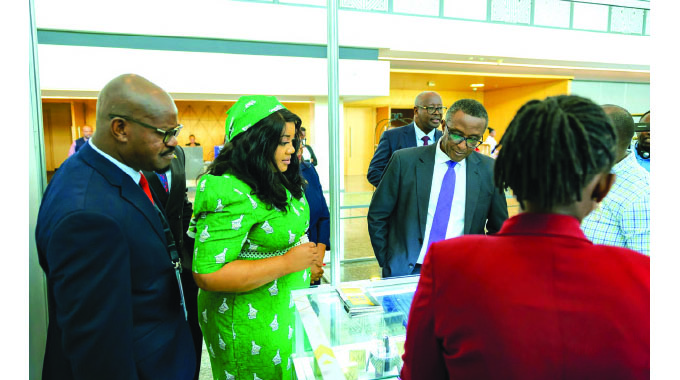
This emerged during the 3rd Zimbabwe Youth Symposium on Disaster Risk Reduction (DRR), held in Harare under the theme “From Risk to Resilience: Reclaiming Youth Agency in Disaster Risk Management.”
The symposium brought together government officials, youth representatives, researchers, development partners, civil society organisations and disaster risk practitioners from across Zimbabwe and the Southern African region to discuss practical solutions to emerging disaster risks and climate-related challenges.
Over the past three years, the symposium has evolved into an important national platform for youth participation in disaster risk governance. The inaugural gathering in 2024 resulted in the establishment of the Zimbabwe National Youth Desk on Disaster Risk Reduction, a pioneering structure that has since become a recognised platform for youth engagement in disaster management.
The youth desk has continued to expand its footprint, strengthening representation at provincial level and increasing youth participation in policy dialogue, research and international engagements. In 2025, a youth position paper developed through the symposium was presented at the Global Platform for Disaster Risk Reduction in Geneva, giving Zimbabwean youths an opportunity to contribute to global discussions on disaster resilience.
Speaking during the symposium, representatives of the Africa Youth Advisory Board on Disaster Risk Reduction (AYAB-DRR) highlighted the importance of institutionalising youth participation in disaster risk governance across the continent.
AYAB-DRR was established to promote structured youth involvement in disaster risk reduction processes within African Union member states and to support the implementation of Agenda 2063 and the Sendai Framework for Disaster Risk Reduction.
Presenting on behalf of the board, Ms Ruth Chomola said Zimbabwe had become a model for youth participation after successfully establishing a government-recognised national youth desk on disaster risk reduction.
She commended the Ministry of Local Government and Public Works and the Department of Civil Protection for embracing the initiative and integrating young people into disaster management structures.
“The recognition of the youth desk demonstrates that young people are valued stakeholders whose contributions are important in shaping disaster risk management systems,” she said.
Ms Chomola noted that AYAB-DRR advocates for meaningful youth participation that goes beyond consultation, promoting stronger collaboration between generations and ensuring young people are involved in decision-making processes.
Officially opening the symposium, Deputy Minister of Local Government and Public Works, Hon. Engineer Benjamin Kabikira, reaffirmed Government’s commitment to youth inclusion in disaster risk reduction initiatives.
He said young people play a critical role in strengthening community resilience and should be viewed as active partners in development rather than passive beneficiaries of interventions.
“Young people are indispensable partners in building resilient communities and a resilient nation,” said Hon. Kabikira.
The Deputy Minister also provided an update on ongoing legislative reforms, revealing that Government is finalising a new Disaster Risk Management Bill that will replace the Civil Protection Act.
He said the proposed legislation represents a significant shift from a disaster response-centred approach towards a comprehensive disaster risk management framework that prioritises prevention, preparedness, mitigation, recovery and resilience-building.
According to Hon. Kabikira, the new Bill seeks to improve institutional coordination, strengthen early warning systems, promote risk-informed development planning and enhance community participation in disaster management.
He encouraged participants to contribute recommendations that can help shape an inclusive and responsive disaster risk management framework.
The symposium also received support from ActionAid Zimbabwe, which has been working with communities affected by disasters and climate shocks in various parts of the country.
ActionAid Zimbabwe Country Director, Dr Selina Pasirayi, emphasised the importance of partnerships in building resilient communities.
Drawing from the organisation’s experience supporting communities affected by Cyclone Idai and other disasters, she said resilience can only be achieved through coordinated action involving Government, civil society, development partners and local communities.
“Resilience is built through shared responsibility and strong community participation,” she said.
Dr Pasirayi also underscored the importance of recognising the role of women and girls in disaster preparedness and recovery efforts, noting that they often experience the greatest impacts during crises while also possessing valuable knowledge that contributes to resilience-building.
A key feature of this year’s symposium was the presentation of youth-led research covering innovation and technology, governance and natural resource management, as well as gender and community resilience.
The research explored practical solutions including the use of artificial intelligence in early warning systems, indigenous knowledge systems, climate finance accountability, community rights in mining areas and approaches to strengthening resilience among vulnerable groups.
Participants also examined the relationship between natural resource governance and disaster risk management, discussing how Zimbabwe’s mineral resources can contribute to sustainable development while protecting communities from environmental risks.
Deliberations further explored opportunities for aligning the proposed Disaster Risk Management Bill with reforms in the mining sector to ensure that resource extraction supports community resilience and environmental sustainability.
Youth representatives called for stronger investment in disaster risk reduction initiatives, stressing the need for adequate financing to support policy implementation and community-based resilience programmes.
The symposium is expected to produce a Zimbabwe Youth Position Statement on Disaster Risk Reduction, a research compendium and a set of policy recommendations that will be submitted to relevant Government ministries and Parliamentary Portfolio Committees.
Stakeholders also reaffirmed their commitment to strengthening youth participation in disaster risk governance and enhancing contributions to the Sendai Framework monitoring processes.
The 3rd Zimbabwe Youth Symposium on Disaster Risk Reduction was convened by the Department of Civil Protection under the Ministry of Local Government and Public Works in partnership with ActionAid Zimbabwe, the Zimbabwe National Youth Desk on Disaster Risk Reduction and the Africa Youth Advisory Board on Disaster Risk Reduction.
The gathering reinforced the growing recognition that young people are not only future leaders but active contributors to Zimbabwe’s efforts to build safer, stronger and more resilient communities.
