
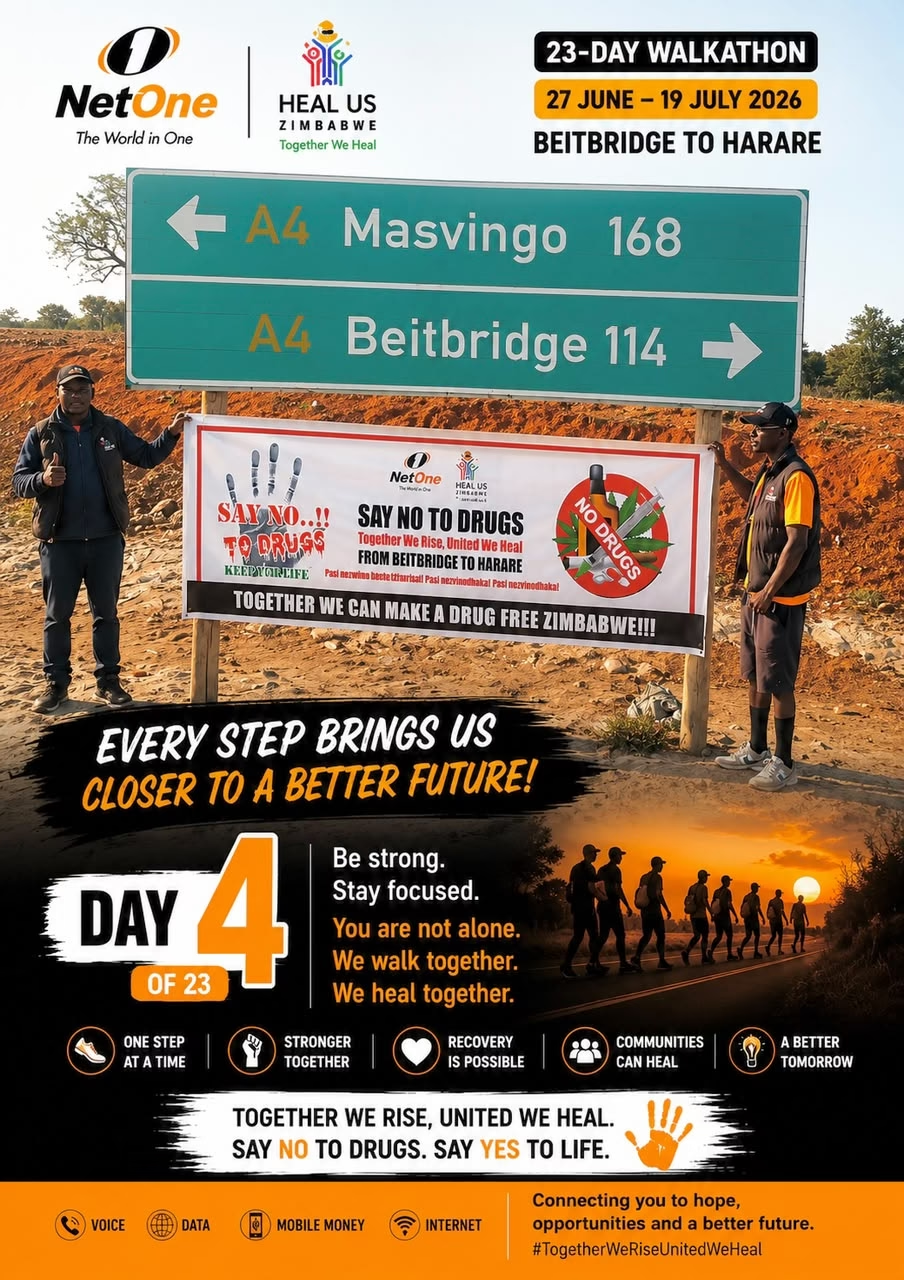
A 23-day, 500-kilometre walkathon from Beitbridge to Harare is putting Zimbabwe’s escalating drug abuse crisis back in the national spotlight, as state-owned telecoms operator NetOne partners with grassroots recovery organisation Heal Us Zimbabwe to confront a problem officials say has reached emergency proportions.
The march, themed “Together We Rise, United We Heal,” began on 27 June and is scheduled to conclude in Harare on 19 July. It is the centrepiece of a wider campaign pairing corporate resources with first-hand experience of addiction and recovery, organisers say, in an effort to reach young Zimbabweans before drugs do.
The urgency behind the initiative is grounded in data. Drug use among the country’s youth climbed from 43 percent in 2017 to more than 57 percent by 2019, a rise that has strained families, disrupted schooling and cost workplaces productivity. President Emmerson Mnangagwa has formally declared the crisis a national emergency.
NetOne Group chief executive Eng. Raphael Mushanawani said the company’s involvement was about more than visibility. “We are running towards a future where our youth reject substance abuse,” he said ahead of the walkathon’s launch in Beitbridge. “As NetOne, we are honoured to play a central role in this revolution. But we cannot do it alone.”
That acknowledgment is what brought Heal Us Zimbabwe into the partnership. The organisation was founded by Columbus Tapiwa Mushore, who overcame his own struggle with addiction and has since focused his work on reaching young people still caught in it. Mushanawani said the collaboration paired NetOne’s infrastructure with insight his company could not generate on its own. “Heal Us Zimbabwe connects us to the ground reality,” he said. “They tell us what works, what hurts, and what gives young people a reason to choose life. Our job is to amplify that voice across our entire network — voice, data, mobile money, and internet services.”
The campaign’s reach extends well beyond the marchers’ footsteps. NetOne and Heal Us Zimbabwe have taken their message into schools, community halls and youth centres, running face-to-face sessions intended to chip away at the stigma surrounding addiction. The walkathon itself doubles as a travelling outreach programme: each day’s leg is paired with counselling sessions and testimonies from people in recovery, with local communities drawn in as participants rather than bystanders.
For Mushanawani, the approach reflects a broader philosophy about technology’s role in the crisis. “The same technology that distracts can also rehabilitate and educate, and NetOne is determined to be part of that solution,” he said.
Organisers are also framing the campaign within Zimbabwe’s longer-term economic ambitions. Mushanawani argued that tackling youth drug use is tied directly to the country’s Vision 2030 development goals, noting that a healthy, productive youth population is essential to meeting national economic targets.
As of this week, marchers have reached Day 4 of the journey toward Harare. Along the route, organisers report that walkers have been met by residents offering water and encouragement — a show of grassroots support that campaign leaders say echoes the nature of recovery itself, which rarely happens without help from others.
The campaign’s closing message, repeated at each stop along the route, is blunt: “Your future is in your hands. Say No to Drugs. Say Yes to Life.” Whether that message translates into a measurable dent in Zimbabwe’s youth drug statistics will likely depend on what follows once the marchers reach Harare on 19 July — and whether the partnership’s outreach work continues beyond the walkathon itself.
