
Staff Reporter
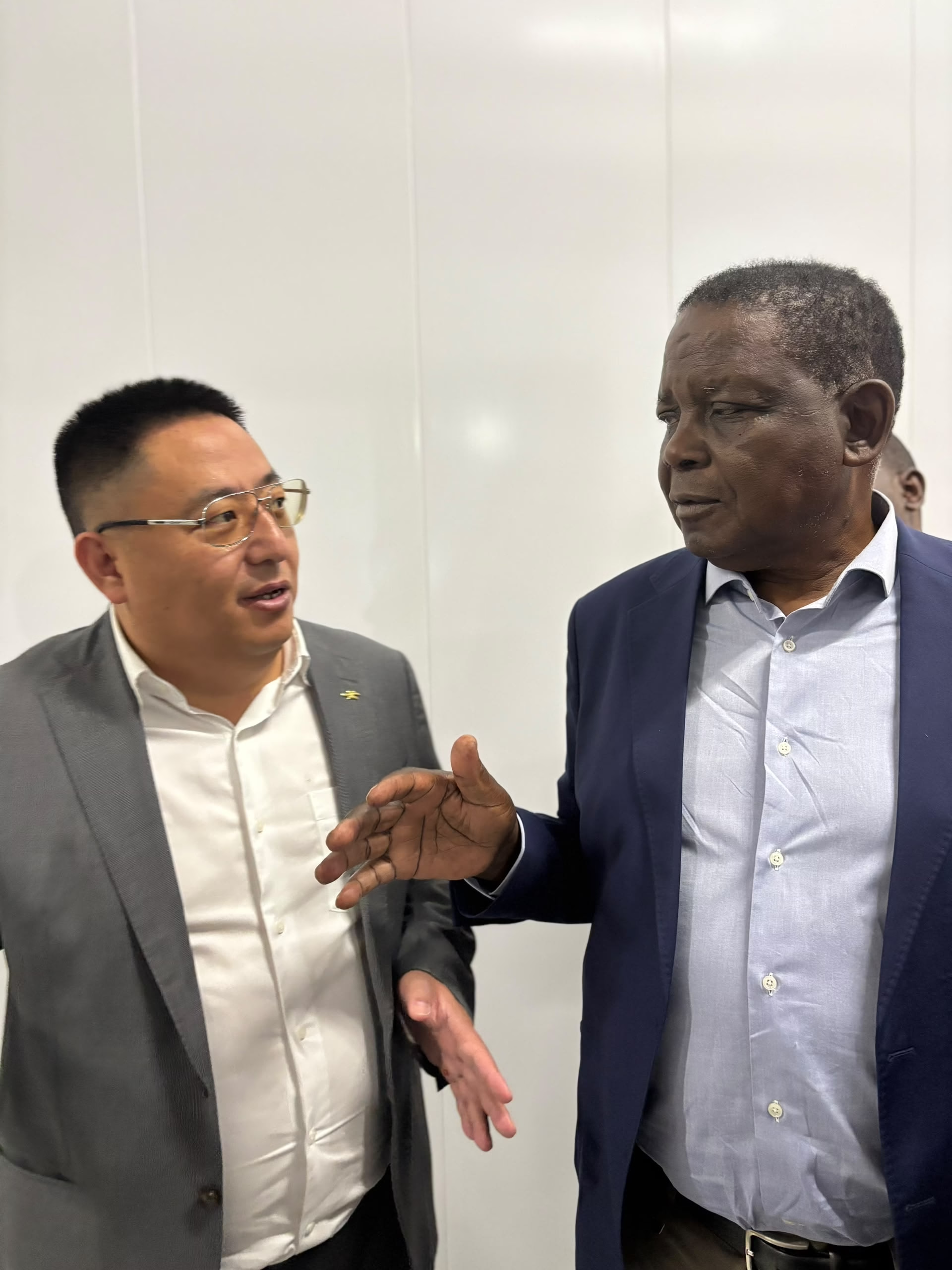
HARARE – A Zimbabwean delegation led by the Hon. Deputy Minister of Mines and Mining Development, Fred Moyo, has returned from a two-week fact-finding mission to China with fresh insights into the opportunities, requirements and long-term prospects for developing Zimbabwe’s lithium value chain.
The delegation travelled to China from 13 to 26 September 2026, undertaking a comprehensive programme of technical visits, industrial inspections, business exchanges and engagements across Shanghai, Jiaxing, Quzhou, Xinyu, Nanchang, Chongqing, Suining, Ya’an and Chengdu.

The mission provided Zimbabwe with an opportunity to gain first-hand insight into the systems, technologies and industrial capabilities that have supported the development of China’s lithium and new energy industries, while strengthening cooperation between the two countries in the mining and minerals sector.
At the heart of the mission was an examination of what is required to move lithium beyond extraction and towards greater value addition, while considering how Zimbabwe can build on its own mineral resource base, investment environment, technical capacity and national development priorities.
The delegation visited battery and cathode materials plants, lithium processing facilities, a lithium slag processing facility, ports and other industrial operations. These engagements offered a practical view of how raw materials move through increasingly sophisticated stages of processing before becoming inputs into the wider battery and new energy industries.
The delegation also gained valuable insight into one of the important foundations of China’s industrial success: its extensive pool of technical talent, advanced technological capabilities and sophisticated industrial support systems, developed over decades of sustained economic and industrial growth. These capabilities have helped create an environment in which increasingly complex stages of the lithium and new energy value chain can operate efficiently and competitively.
For Zimbabwe, the significance of this experience lies not in replicating China’s development model, but in understanding the conditions that have enabled China to build globally competitive industries and identifying lessons that can be adapted to Zimbabwe’s own circumstances. The mission demonstrated that extending a mineral value chain is a substantial industrial undertaking that develops progressively rather than through a single intervention.
A fully integrated lithium value chain requires more than mineral resources alone. It involves technology, specialised skills, research and development, infrastructure, reliable energy, supporting industries, investment and a broad network of suppliers capable of providing the materials and services required at each stage of production. China’s experience illustrated how these capabilities can be accumulated and strengthened over time through sustained investment, industrial development and collaboration.
This perspective is particularly important for Zimbabwe as it considers the next stages of its lithium development. Zimbabwe has established a significant position as a producer of lithium-bearing minerals and has increasingly placed beneficiation and value addition at the centre of its mineral development agenda.
The opportunity now is to build progressively on this foundation, developing the capabilities, partnerships and industrial linkages that can allow more value to be retained within the country.
The mission also highlighted the complexity of the lithium battery industry itself. While lithium is a critical material, battery production and assembly depend on a much wider ecosystem of metallic and non-metallic materials, specialised components, chemical inputs, equipment and other high-end industrial supplies.
The development of this wider ecosystem is therefore an important consideration for any country seeking to participate more deeply in battery manufacturing and other downstream new energy industries.
Zimbabwe’s current industrial base does not yet encompass every input required across the full battery manufacturing chain. Some materials, components and specialised inputs will consequently continue to be sourced through international supply chains as domestic capabilities develop. Rather than representing a weakness in Zimbabwe’s position, this highlights the scale of the industrial opportunity ahead: building commercially viable local capabilities where appropriate while maintaining access to competitive global supply chains and creating opportunities for investment, technology cooperation and skills development.
The experience in China demonstrated that the extension of Zimbabwe’s lithium value chain will be a long-term process requiring patience, investment and sustained industrial development. The supporting ecosystem cannot be established overnight. However, the existence of a strong mineral resource base gives Zimbabwe an important starting point from which these capabilities can be developed in a structured and commercially sustainable manner.
The mission therefore provided a broader understanding of what mineral value addition entails. It is not simply a question of establishing a processing plant. It is about creating an ecosystem around that plant, including technical expertise, research institutions, equipment suppliers, chemical inputs, logistics, energy, skilled personnel, quality control systems and access to markets.
The delegation’s technical programme examined a number of areas that could contribute to this process, including recovery rates, processing technologies, laboratory and analytical capacity, technology licensing and transfer, the use of different lithium-bearing minerals, management of processing residues and opportunities for downstream applications.
The delegation also examined the economic dimensions of the value chain, including pricing mechanisms, production costs, energy, labour, logistics and infrastructure, as well as the commercial structures underpinning relationships between producers and processors.
Skills development was another key area of focus. The delegation sought to understand the competencies required to operate sophisticated processing facilities and the systems used to develop and certify specialised technical skills. These observations can contribute to Zimbabwe’s ongoing efforts to strengthen technical capacity and expand opportunities for Zimbabwean professionals to participate across the mineral value chain.
The mission further highlighted opportunities for deeper cooperation between Zimbabwean and Chinese institutions, industry players, technical experts and research organisations. China’s extensive experience in mineral processing, battery materials and new energy manufacturing presents a valuable platform for knowledge exchange, technology cooperation, investment and skills development. Zimbabwe, in turn, brings significant mineral resources, investment opportunities, a growing beneficiation agenda and its own emerging capabilities and ambitions in the critical minerals sector.
The relationship therefore presents an opportunity for complementarity rather than dependency. Zimbabwe can draw on relevant international experience, expertise and industrial partnerships while retaining ownership of its development priorities and determining which technologies, investments and partnerships best serve its national interests. The objective is not to reproduce China’s industrial journey, but to learn from what has worked, understand the challenges encountered and adapt relevant approaches to Zimbabwe’s own economic and industrial context.
The mission also reinforced the importance of building value chains in a way that is commercially competitive. For battery and new energy products to succeed in global markets, quality, efficiency, reliability and cost competitiveness must be considered alongside the availability of raw materials. China’s industrial experience provided the delegation with a clearer appreciation of the depth of technical, manufacturing and supply-chain capability required to achieve this, as well as the opportunities that can emerge when these capabilities are developed over time.
For Zimbabwe, this creates a pathway to consider how its mineral advantage can be connected to broader industrial development. The country’s lithium resources provide an important foundation, but the long-term opportunity extends beyond mining and primary processing towards skills development, technology, research, supporting industries, manufacturing and participation in international value chains.
The mission therefore represents an important step in a longer journey towards strengthening Zimbabwe’s participation in the global lithium and new energy value chains. There remains significant room for learning, innovation, investment and collaboration, but the experience in China has provided a clearer understanding of both the opportunities ahead and the foundations that will be required to realise them.
For Zimbabwe and China, this creates an opportunity to move beyond cooperation centred solely on the supply of mineral resources and towards deeper engagement around technology, skills, processing, research, investment and industrial development. Such cooperation can support Zimbabwe’s efforts to build domestic capabilities while also creating mutually beneficial commercial and industrial opportunities for both countries.
The China fact-finding mission has consequently opened further avenues for dialogue and collaboration while providing practical insights that can inform Zimbabwe’s approach to mineral beneficiation. As global demand for lithium and other critical minerals continues to grow alongside the transition towards new energy technologies, Zimbabwe has an opportunity to build progressively on its mineral resource base and strengthen its position within these emerging global value chains.
The journey will require patience, investment, innovation and continued cooperation. But Zimbabwe enters this next phase with significant mineral resources, growing experience in lithium production and beneficiation, and a clear opportunity to build new industrial capabilities around these strengths. The mission has provided a valuable window into what is possible and, perhaps more importantly, a clearer understanding of the journey required to get the
