
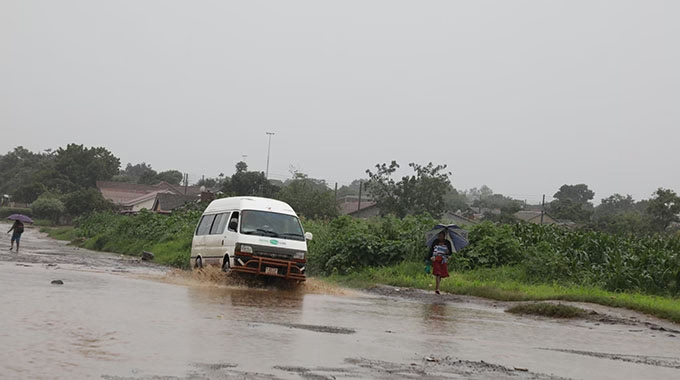
The devastating flash floods that recently tore through Epworth have exposed a gaping hole in environmental law enforcement, raising tough questions about the Environmental Management Agency’s (EMA) apparent silence while residents settle in high-risk ecological zones.
While the floods have left hundreds homeless and thousands more vulnerable, the disaster is being viewed not just as a natural calamity, but as a failure of oversight. Despite clear regulations prohibiting construction on wetlands and riverbanks, illegal structures continue to mushroom in Epworth’s ward 5, directly in the path of the disaster.
A Regulatory Vacuum?
The recurring crisis highlights a lack of proactive intervention from the EMA, the body tasked with protecting the environment and ensuring sustainable land use. While the agency is quick to penalize small-scale offenders, the unchecked expansion of settlements into riverbanks suggests a lapse in monitoring and enforcement.
Councillor for Epworth Ward 5, Chamunorwa Takundwa, admitted that local authorities are struggling to contain the influx.
“Residents sometimes resist going to build where they were legally allocated; they keep building on riverbanks. However, some are there because they have no place to go. All those people have been affected, and we have nowhere to put them,” Takundwa noted.
Government Calls for Enforcement
The Minister of State for Provincial Affairs and Devolution, Charles Tavengwa, visited the submerged areas and echoed the need for stricter adherence to the law—a move that many feel should have been spearheaded by environmental regulators long before the rains started.
“What is sad is that some people have been allocated places to stay but they keep going back to build on riverbanks,” Tavengwa said. “We have spoken with the council, and there is a need to enforce by-laws.”
Humanitarian Crisis and Response
As the blame game continues, the immediate reality on the ground is grim. Residents are currently seeking refuge at Epworth High School following emergency evacuations.
-
Red Cross Zimbabwe: Disaster Management Coordinator Paul Moyo confirmed a swift response, providing tents, soap, and water buckets to mitigate the inevitable risk of waterborne diseases.
-
Local Representation: MP for Epworth South, Honour Mbofana Mutana Taendzwa, has vowed to ensure that the displaced families are fed while they remain in temporary shelters.
The Regularization Paradox
The government is currently pushing a densification strategy to regularize informal settlements. In the Epworth Local Board, over 14,500 stands have been allocated, with another 4,046 earmarked for regularization under the City of Harare.
However, “regularization” often comes too late for those already settled in flood-prone zones. Critics argue that if the EMA had been more active in identifying and cordoning off these red zones years ago, the current humanitarian crisis could have been avoided.
| Key Statistics | Figures |
| Allocated Stands | 14,500+ |
| Stands for Regularization | 4,046 |
| Primary Risks | Lack of sewer, water, and electricity |
As Epworth residents pick up the pieces, the spotlight remains firmly on the EMA and local government. The question remains: will they act now to prevent the next disaster, or wait for the next rainy season to issue warnings that come too late?

For comments, Feedback and Opinions do get in touch with our editor on WhatsApp: +44 7949 297606.
