
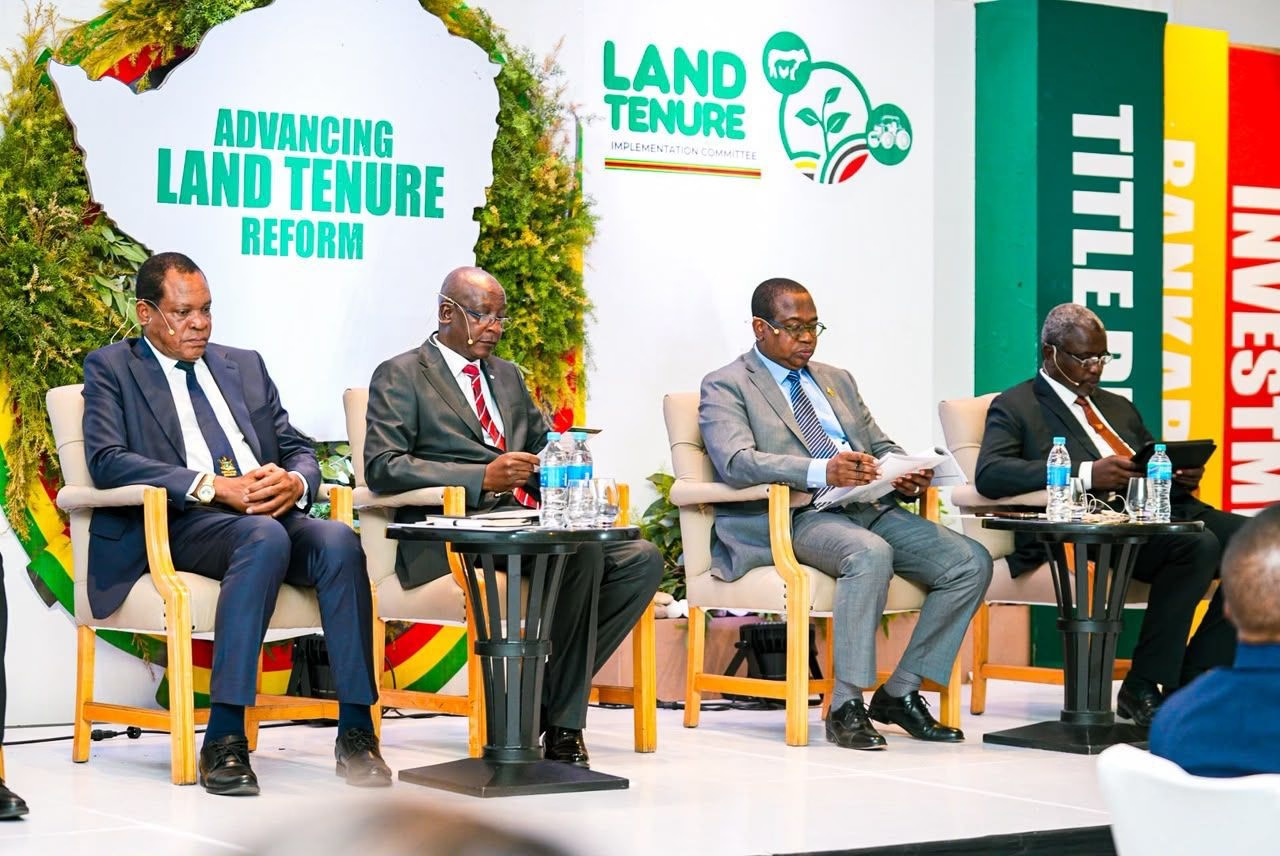
Zimbabwe’s land tenure programme will only deliver meaningful economic transformation if title deeds are supported by a full suite of financial services, markets and infrastructure, Land Tenure Implementation Committee (LTIC) Chairman Dr Kudakwashe Tagwirei has said.
Addressing a high-level stakeholder meeting in Harare on Thursday, Tagwirei cautioned that the issuance of title deeds, while significant, was not an end in itself but a gateway to broader economic participation.
“A deed alone does not create wealth. Value is created in the ecosystem built around secure tenure – finance, markets, infrastructure, inputs, technology and technical support,” he said.
Tagwirei said the ultimate measure of success would not be the number of deeds processed, but whether beneficiaries could leverage their new assets to access capital, raise productivity and improve household incomes.
He laid out a five-link economic chain that he said would determine the programme’s impact: secure tenure making land bankable, bankable land attracting investment, investment raising productivity, and productivity delivering both household and national prosperity.
“Every link in that chain rests on the first,” he said.
The LTIC chairman disclosed that as of August 24, 2026, 27,045 farms had been surveyed and 1,417 title deeds registered, unlocking US$110.4 million in value. A total of 352,000 citizens stand to benefit from the programme.
Tagwirei said the US$16.8 billion Development Fund, capitalised through mortgage repayments and managed by the Ministry of Finance, would be recycled into compensation, debt reduction, infrastructure and agricultural lending.
He challenged financial institutions to move beyond viewing the reforms as a risk-management exercise and instead develop fit-for-purpose products, including seasonal finance, asset finance and insurance.
“The financing architecture is in place; we have five designated banks which carry the mortgage programme equally,” Tagwirei said, adding that farmers acquire land on a 60 to 70 percent baseline discount with mortgages of up to 20 years at 7.5 percent per annum.
The LTIC was established to coordinate implementation of Government’s land-tenure reforms, which aim to provide beneficiaries with bankable, registrable and transferable tenure documents.
Tagwirei stressed that integrating land into the formal economy and the national balance sheet would transform the agricultural sector, but only if the supporting infrastructure around tenure was fully developed.
