
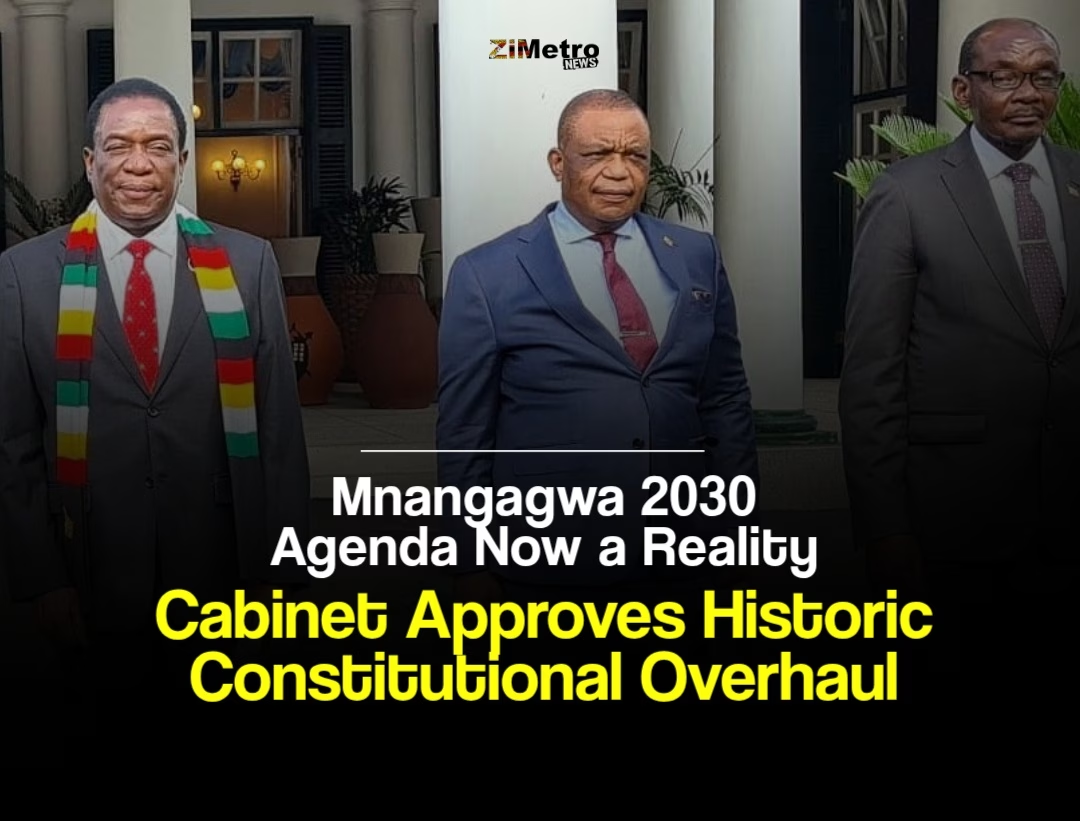
Harare, Zimbabwe | The long-debated “ED2030” vision moved from a political slogan to a legislative reality on Tuesday after the Zimbabwean Cabinet officially backed a draft bill to amend the Constitution. The landmark changes seek to extend the presidential term from five to seven years and shift the election of the Head of State from a popular vote to a parliamentary process.
The move marks a decisive victory for the Second Republic’s development agenda, ensuring that President Emmerson Mnangagwa remains at the helm to oversee the completion of his ambitious socio-economic reforms.
Under the proposed legislation, Zimbabwe will transition to a seven-year presidential term. This extension is viewed by supporters as a necessary step to provide the Executive with sufficient time to implement long-term projects under the National Development Strategy (NDS2) without the disruptions of frequent electoral cycles.
By extending the current mandate, the Bill effectively paves the way for President Mnangagwa, currently 83, to lead the nation until 2030. His current term was originally slated to end in 2028.
Parliament to Decide the Presidency
In a radical departure from the 2013 Constitution, the Bill proposes that the President be elected by Parliament rather than through a direct popular vote. This shift aligns Zimbabwe with other parliamentary democracies, potentially reducing the cost and political polarization associated with general elections.
Justice, Legal, and Parliamentary Affairs Minister Ziyambi Ziyambi confirmed the development during a post-cabinet briefing.
“The Bill will now be transmitted to the Speaker of Parliament and subsequently published in the Government Gazette. This is about ensuring our laws serve the developmental aspirations of the people,” Ziyambi stated.
Succession Debate Silenced
For months, ZANU-PF has been rocked by internal discussions regarding the 2028 succession. However, this legislative move appears to have anchored the party’s position. With ZANU-PF holding a commanding two-thirds majority in the National Assembly and control over the Senate through traditional leaders and proportional representation, the passage of the Bill is widely considered a formality.
While the ruling party moves with precision, the fractured opposition has struggled to mount a unified response. Jameson Timba, a senior leader in the opposition movement, condemned the Cabinet’s decision, labeling it “politically destabilizing.”
Timba announced that a coalition named the Defend the Constitution Platform would be seeking legal counsel and engaging regional partners to challenge the amendments. However, legal experts note that the ruling party’s legislative dominance makes any parliamentary blockade unlikely.
Since taking office in 2017, President Mnangagwa has centered his presidency on the mantra “Zimbabwe is Open for Business.” The transition to a seven-year term and a parliamentary election system represents a significant shift in the country’s political architecture, signaling that the 2030 Agenda is now the definitive roadmap for the nation’s future.

For comments, Feedback and Opinions do get in touch with our editor on WhatsApp: +44 7949 297606.
