
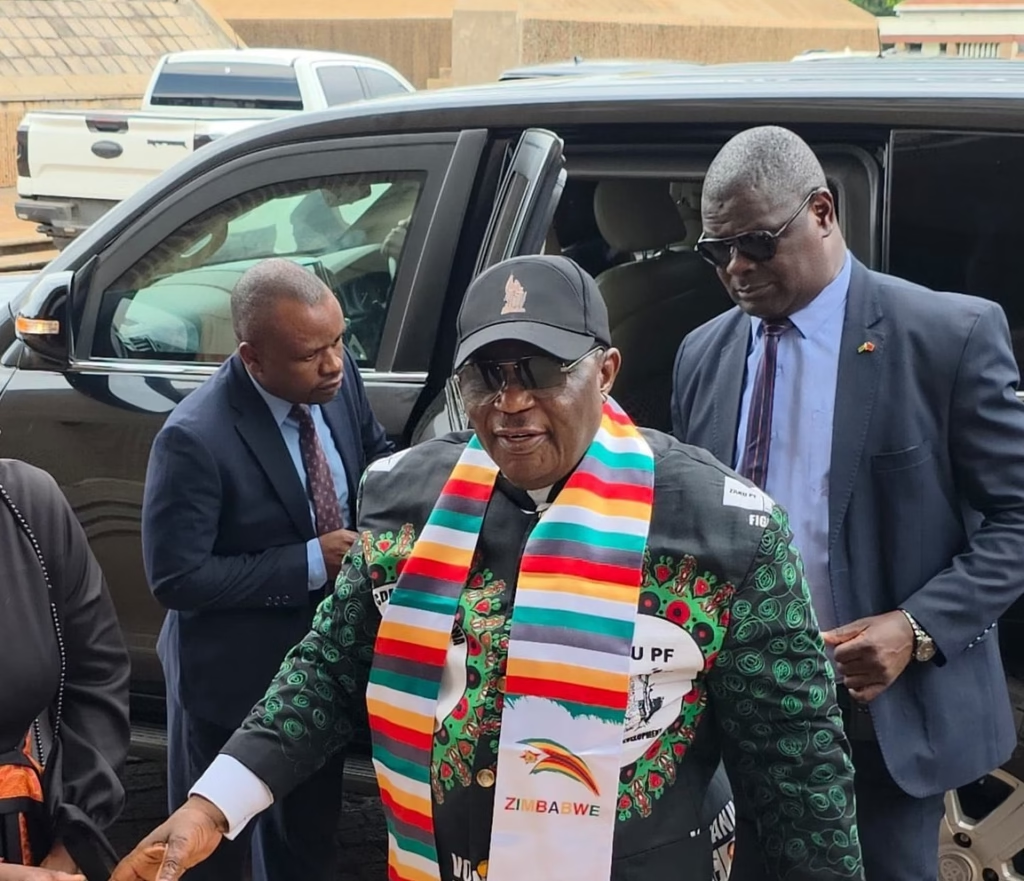
Vice President Constantino Chiwenga has taken a swipe at a growing class of well-connected Zimbabweans flaunting sudden wealth, urging them to redirect their riches toward ventures that genuinely uplift the country.
Speaking to supporters recently, Chiwenga questioned why individuals who have amassed substantial fortunes were choosing lavish lifestyles over meaningful investment at home.
He criticised what he described as a culture of boastful spending, asking why those with surplus funds were not establishing industries capable of creating jobs and stimulating the economy.
Chiwenga also cautioned against the misplaced hope that foreign capital would transform Zimbabwe, insisting that outside investors were ultimately driven by profit and resource extraction rather than national development.
“No outsider will build Zimbabwe for us,” he warned, stressing that sectors such as mining, tourism and manufacturing often attract investors seeking to maximise their own returns.
Although the Vice President avoided naming anyone directly, his comments come amid mounting public interest in high-profile businessmen linked to President Emmerson Mnangagwa. Figures such as Wicknell Chivayo, Paul Tungwarara and Kudakwashe Tagwirei have dominated headlines for handing out vehicles and cash to Zanu-PF supporters as part of the party’s Vision 2030 campaign.
Also Read: Willdale Farm evictions leave thousands stranded as HIV patients beg strangers for lifesaving drugs
Chiwenga’s remarks are already fuelling speculation of widening rifts within the ruling party. His critique appears to align him with widespread concerns over corruption and extravagant patronage networks tied to Mnangagwa’s inner circle.
Since the 2017 military-assisted transition that removed the late Robert Mugabe, Chiwenga—once viewed as the natural successor—has been positioned as a central player in Zanu-PF’s future leadership race. But shifting political dynamics now suggest Mnangagwa may be quietly grooming Tagwirei as his preferred successor, potentially reshaping succession battles ahead of 2028.
Chiwenga’s latest broadside against conspicuous wealth may therefore be more than a moral lecture—it could be a strategic attempt to court public sympathy as internal power struggles intensify.