
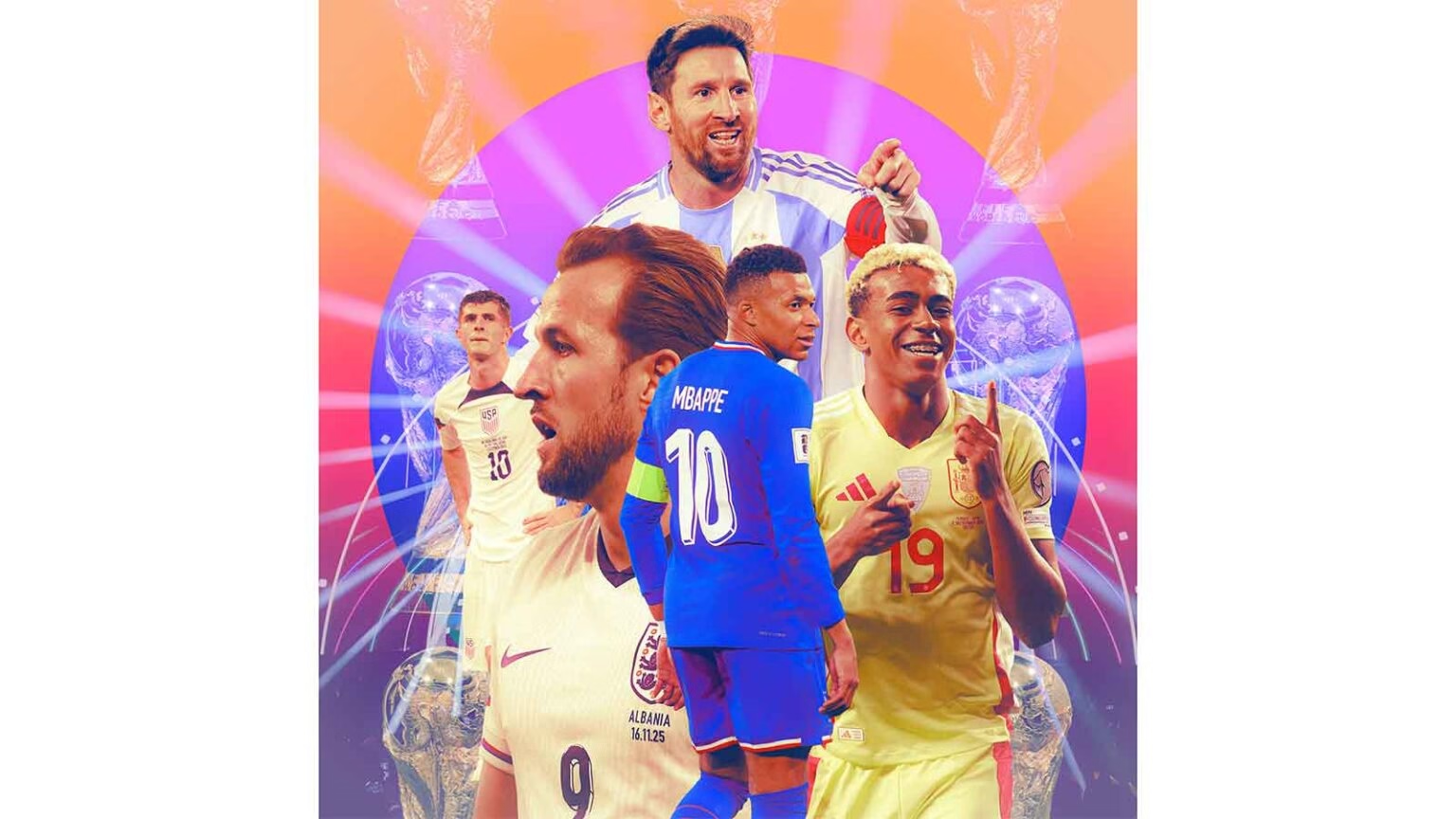
The FIFA World Cup, often hailed as the planet’s premier sporting spectacle, unites nations and cultures in a month-long celebration of football. However, this global event frequently finds itself embroiled in controversy, demonstrating that the world of sport is not immune to broader societal issues.
From allegations of corruption and political disputes to human rights concerns and, most recently, immigration challenges, the tournament consistently highlights its entanglement with complex global dynamics.
The latest incident casting a shadow over the upcoming 2026 FIFA World Cup involves Somali referee Omar Abdulkadir Artan. Despite being selected to officiate at the prestigious tournament, Artan was refused entry into the United States due to unspecified vetting issues. This decision effectively dashed his hopes of becoming the first Somali referee to participate in a FIFA World Cup, a dream that was officially ended when FIFA confirmed his exclusion from the event.
This development has ignited widespread indignation across Africa and among football enthusiasts globally. Many critics argue that if a FIFA-approved referee, equipped with all necessary travel documentation, can still be barred from entry, it raises profound questions about the World Cup’s commitment to inclusivity and global representation. The incident, they contend, has already tarnished the competition’s image even before a single match has been played.
Artan’s case is merely the latest in a long history of controversies that have plagued the World Cup. FIFA itself has faced persistent criticism over corruption allegations, particularly concerning the allocation of hosting rights. The selection of certain host nations has often sparked debate, with many questioning whether political and financial motives overshadowed purely football-related considerations.
Concerns regarding the treatment of migrant workers, restrictions on fundamental freedoms, and the environmental impact of hosting such a massive event have led many to question FIFA’s priorities, suggesting that commercial success might be prioritized over ethical responsibilities.
Political disagreements have also been a recurring theme. Governments frequently leverage the World Cup as a platform to project influence, and diplomatic tensions between countries can easily spill over into the sporting arena. Visa restrictions, travel prohibitions, and security concerns have, at times, complicated participation for players, officials, and supporters alike. The Omar Artan situation starkly underscores how political and immigration policies can directly impact the game.
Even within the matches themselves, controversies are never far off. Disputed refereeing decisions, accusations of bias, match-fixing claims, and debates surrounding technologies like VAR frequently dominate headlines. While passion and disagreement are inherent to football, repeated controversies can erode public trust in the fairness and integrity of the competition.
Despite these persistent challenges, the World Cup retains its powerful symbolism as a force for global unity. It is precisely this expectation of fairness, inclusion, and equal opportunity that leads to intense scrutiny when these values appear to be compromised. The case of Omar Artan serves as a poignant reminder that the World Cup’s significance extends beyond mere goals and trophies; it is also about upholding football’s promise to bring the world together in practice.
