
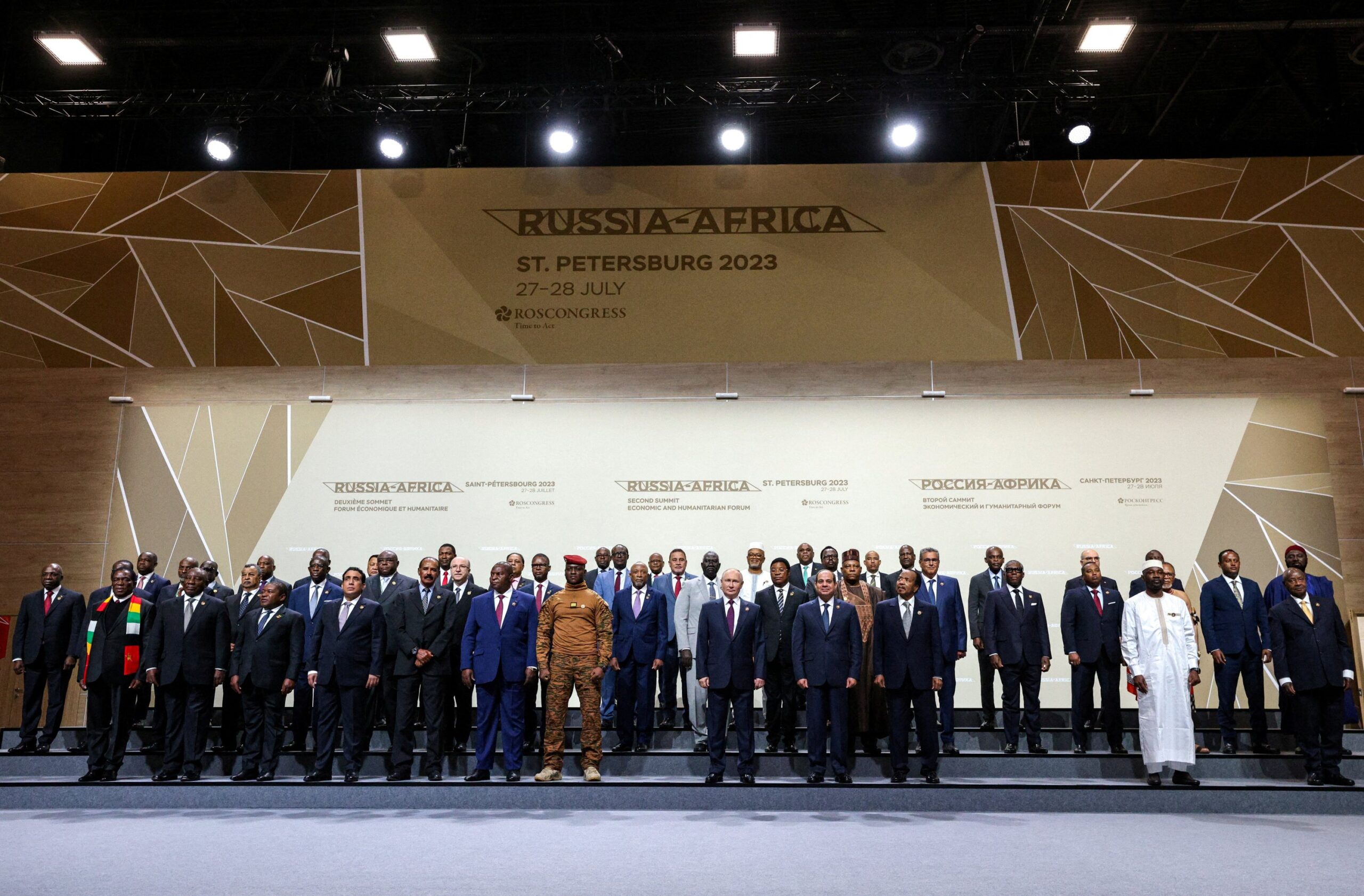
Harare | Two more countries – Zimbabwe and Ethiopia – have signed agreements with Russia to cooperate on the peaceful use of nuclear technology on the sidelines of the Russia-Africa Economic and Humanitarian Forum, which has been taking place in St Petersburg.
The intergovernmental agreement between Russia and Zimbabwe – which follows a memorandum of understanding concluded in September 2021 – was signed by Rosatom Director General Alexei Likhachev and Zimbabwe’s Energy Minister Soda Zhemu.
Rosatom said: “It establishes a legal framework for cooperation between Russia and Zimbabwe in the peaceful use of atomic energy in a wide range of areas, such as assistance in the creation and improvement of Zimbabwe’s nuclear infrastructure in accordance with international guidelines; regulation in the field of nuclear and radiation safety, production of radioisotopes and their use in industry, medicine and agriculture; cooperation in areas of application of radiation technologies and nuclear medicine, education, training and retraining of specialists for the nuclear industry.”
Also on the sidelines of the forum, Russia and Ethiopia signed a roadmap for bilateral cooperation in the use of atomic energy for peaceful purposes.
According to Rosatom: “The roadmap defines specific steps that the parties will take in 2023-2025 to explore the possibilities of building a nuclear power plant of large or small capacity, as well as a Nuclear Science and Technology Center in Ethiopia. The parties plan to work together to develop Ethiopia’s national nuclear infrastructure, organise technical tours and seminars, and meetings of specialised working groups.”
On Thursday it was announced that Russia and Burundi had signed a memorandum on cooperation on peaceful use of nuclear technology, including training of personnel and applications such as medicine and agriculture in addition to production of energy.
Apart from South Africa, which has had an operating nuclear energy plant for nearly four decades, the next country in Africa set to get a nuclear power plant is Egypt, where Russia’s Rosatom is currently building the four VVER-1200 unit El Dabaa plant.
More | ZiMetro News
